
Updated October 2026. For commercial crews.
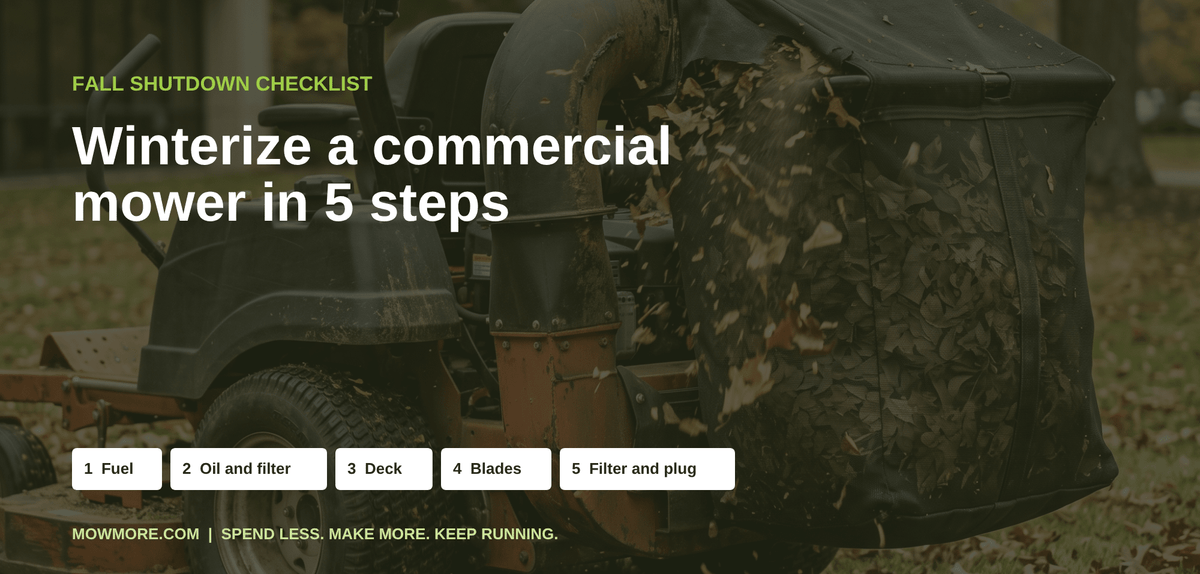
Every mower in your fleet is about to sit for a few months. What you do before it sits decides how it starts in spring. Here's the order that works, and the questions crews ask most.
Step 1: Fuel
Ethanol-blended gas attracts moisture and breaks down over time, which is how gum and varnish end up in a carburetor. You have two good options: add fuel stabilizer to a full tank and run the engine for a few minutes so the treated fuel reaches the carburetor, or run the tank dry. Pick one and use it on every machine so nothing gets missed.
Mowmore carries STA-BIL Storage Fuel Stabilizer in a 32 oz bottle. Follow the dosing on the label.
Step 2: Oil and filter
Change the oil and the oil filter before storage, not after. Used oil carries contaminants, and you don't want it sitting in the engine for months. If your crews already track oil by hours, do this at the last service of the season.
Step 3: Deck
Scrape the deck clean while the grass is still dry enough to come off. Then coat it with a non-stick spray. Wet grass left on bare steel rusts it, and a clean, coated deck makes the first mow of spring faster. A Grassbuster scraper and Mo-Deck cover both jobs.
Step 4: Blades
Pull every blade and look for cracks, bends and worn hub areas. Sharpen the ones with life left and replace the rest. The shop is slow right now, so this is the cheapest time to do it. If you need a refresher on angle and balance, see Mower Blade Sharpening: The Right Angle, Balance, and the Mistakes That Kill Blades. If you're replacing, The Complete Guide to Lawn Mower Blades covers fitment, and the blade collection has the stock.
Step 5: Air filter and spark plug
Swap the air filter and spark plug now. They're inexpensive, they take minutes, and it's one less thing to chase when three mowers need to run on the same April morning.
For the rest of the fleet checklist (belts, battery, spindles), our late-season maintenance guide covers it.
Chainsaws and other handhelds
Saws and handhelds follow the same fuel rule as the mowers. Mixed 2-cycle fuel goes stale too, so don't leave a half-full can of it sitting all winter, and treat or run dry whatever is in the saw. Then clean the bar groove and the chain, check the chain for rounded cutters and the bar rails for wear, replace the fuel filter and air filter, and top off bar and chain oil so the first cut of the season isn't a dry run. Mowmore carries Timberline All-Season Bar and Chain Oil in a 1 gallon jug, fuel filters for chain saws and trimmers, and replacement chain. Match a chain by pitch, gauge and drive link count from the old one.
Winterizing FAQ
Do I need to drain the fuel before winter storage?
No. Treated fuel can stay in the tank if you add stabilizer to fresh gas and run the engine so it reaches the carburetor. Running the tank dry is the other accepted method. What doesn't work is storing untreated fuel.
How long does fuel stabilizer last?
The STA-BIL Storage bottle is labeled for keeping fuel fresh up to 24 months. Check the current label for the exact dosing and storage time on the bottle you buy.
Should I change oil before or after storing a mower?
Before. Fresh oil goes in, and the old oil doesn't sit in the engine all winter.
What else should go on the fleet list before the first freeze?
Belts, tires, blade bolts and spacers, trimmer line, and bar and chain oil and a fuel filter for the saws. Walk the fleet, write it down, and order once.
How do I winterize a chainsaw?
Treat or run out the fuel, clean the bar and chain, check the chain and bar for wear, replace the fuel and air filters, and refill bar and chain oil. The saw section above has the detail.
Shop winterization parts at Mowmore.com. Most orders ship same day or next day. Cutter Club is free to join and earns points toward free products and free shipping.