
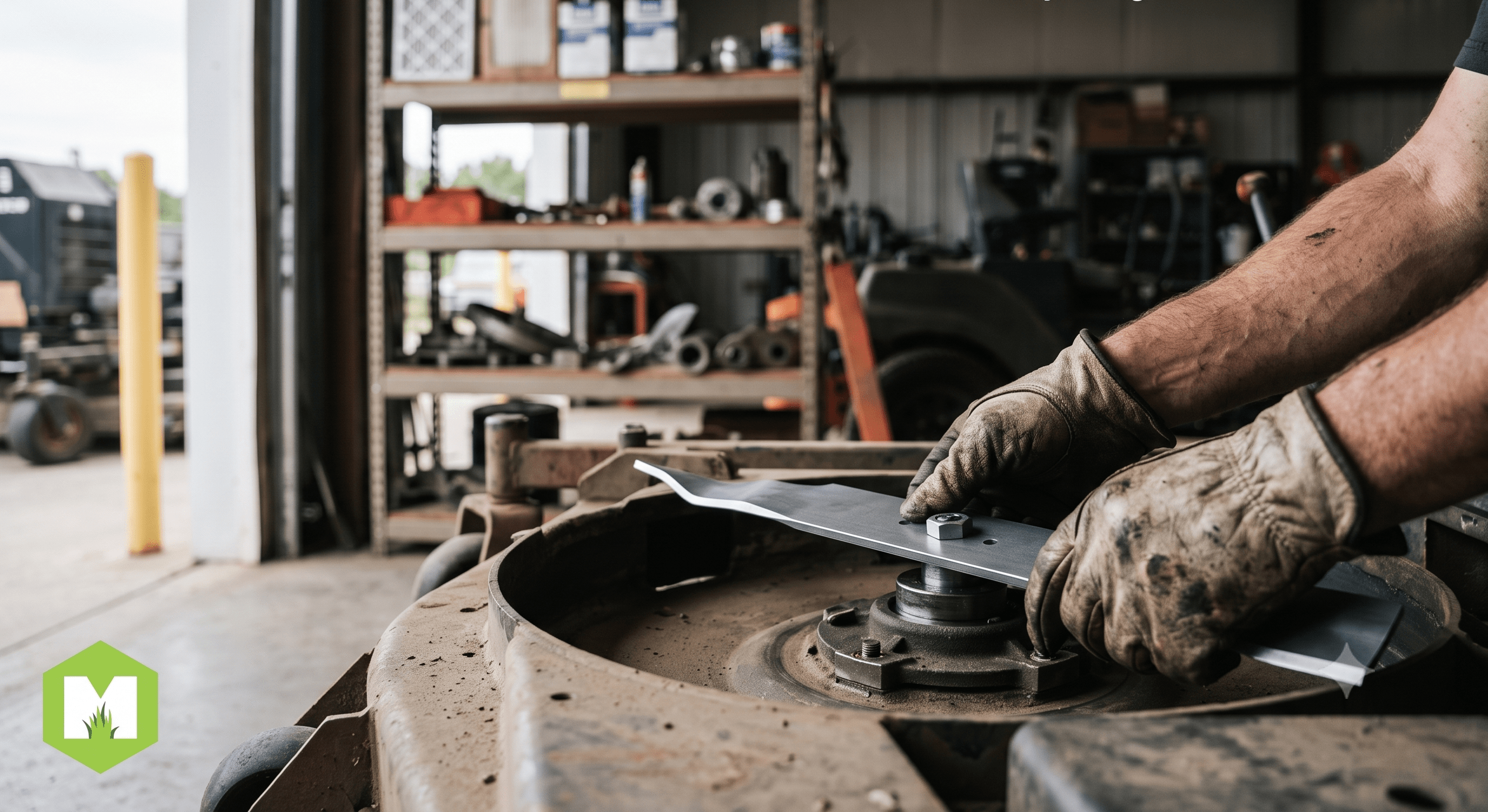
Running the wrong blade on a job doesn't take your mower down. It just costs you time, fuel, and a cut that doesn't look like it came from a professional crew. Most operators know when a blade needs replacing. Fewer stop to ask if it's even the right type for the job in front of them.
What's a High-Lift Blade Actually For?
High-lift blades pull grass up hard before the cut, which is what you want on taller, thicker turf and anywhere you're bagging clippings. The steeper wing angle moves more air, so the discharge chute stays clear even in wet or heavy grass. If your crews are running properties with fast growth, or you're bagging more than mulching, this is your default blade.
What's a Standard (2-in-1) Blade For?
A standard blade is the generalist. Moderate lift, clean discharge, a solid cut on typical maintenance-height turf. It's the blade most fleets already run, because most jobs don't need anything more specialized. If a property doesn't call for heavy bagging or a fine mulch, standard is usually the right call, and the cheapest one to stock in volume.
What's a Mulching (Gator) Blade For?
Mulching blades, often called gator blades, are built to cut the clipping down small enough to leave on the lawn instead of bagging it. Multiple cutting edges break the grass down more times per pass, which means less clean-up time and fewer trips to the dump on properties where you're not required to bag. It's also a bigger category than most people expect, and a lot of crews should be running it more than they currently are.
Quick Comparison
| Blade Type | Best For | What You'll Notice |
|---|---|---|
| High-Lift | Tall/thick turf, bagging | Strong airflow, clean discharge |
| Standard | General maintenance mowing | Balanced cut, most versatile |
| Mulching / Gator | No-bag properties, fine finish | Less clean-up, finer clipping |
Get the Fitment Right Before You Order
Blade type is half the decision. Fitment is the other half, and it's the part that actually costs you money if you get it wrong. Center hole size, blade length, and lift height have to match the deck, not just the mower brand (full measuring and part-number walkthrough here). Mowmore's blades are cross-referenced across major ZTR and walk-behind brands and designed to match or exceed OEM specs in durability and fit, so once you know the type you need, ordering the right one is fast, not a guessing game.
Why the Right Blade Pays for Itself
A sharp, correctly matched blade doesn't just look better. Sharp blades use up to 22% less fuel per acre than dull ones (University of Nebraska, Steinegger et al., 1983), and a clean cut is one less thing working against your crew's time on a property. That adds up across a fleet running multiple machines a day.
Order It Once, for the Whole Fleet
Here's the part most operators skip. Once you know which blade type each machine needs, there's no reason to keep reordering one at a time as the season winds down. A single order sized for every machine on your fleet, in the types you actually need, gets you through the rest of the season without another reorder. Mowmore's pricing sits well below dealer rates, with bulk deals built in for fleet-sized orders. Shop the blades collection and you're done thinking about blades until next spring.
Running something other than high-lift, standard, or mulching? See the full type-by-type breakdown, including low-lift and sand blades. For sharpening and everything else blade-related, check the complete blade guide.
3 comments
Ioan Ardeleanu
Excellent product,excellent service.
David Price
Looking for a set of 3 blades to replace cub cadet 742-3038.
clabron cox
iam looking for a 42in blades toro 1232 professional