
2025 Landscaping Trends & Takeaways
What Working Landscapers Should Know Heading Into the New Year
As 2025 wraps up, most landscapers are doing the same thing they do every winter: looking back at what worked, what didn’t, and how to set themselves up for a better year ahead.
The work is still there. Demand didn’t fall off. But 2025 made one thing clear: running a landscaping business isn’t getting any easier. Labor is tight, costs stayed high, and the guys who stayed profitable were the ones who ran tighter operations, not just longer days.
Here’s where the landscaping industry stands at the end of 2025—and what to keep in mind as you head into 2026.

Landscaping Is Still Growing Going Into 2026
The U.S. landscaping industry finished 2025 strong.
- About $186–188 billion in annual revenue
- More than 1.3 million people employed
- Roughly 700,000 landscaping companies nationwide
- Average growth of 6.5% per year from 2020–2025
- On pace to reach $245 billion by 2030
Heading into 2026, the demand for landscape maintenance, construction, and outdoor services isn’t slowing down. Property owners are still spending—especially on maintenance and improvements that protect long-term value.
The opportunity is there. The challenge is keeping margins intact.
Most Landscaping Companies Are Still Small Operations
While national companies like BrightView Holdings get the headlines, the reality of the industry hasn’t changed.
- Over 50% of landscaping businesses have fewer than 10 employees
- About 90% have fewer than 50 employees
- Around 65% earn more than $1 million per year
- Most companies still operate under $3 million in annual revenue
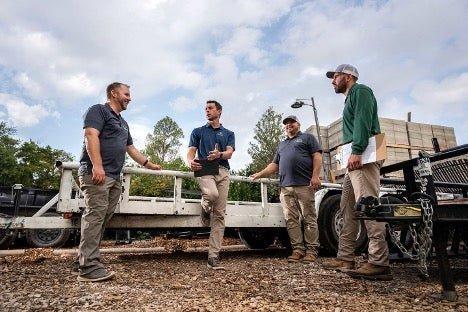
That means the majority of landscapers are owner-operators or small teams balancing growth with burnout. If that sounds like your shop, you’re in the same boat as most of the industry.

Where the Money Is Coming From Heading Into 2026
Basic mowing keeps the lights on, but it’s no longer where the strongest margins are.
Core Services That Still Drive Revenue
- Residential and commercial maintenance
- Landscape construction (design-build and bid-build)
- Lawn treatments and pest control
- Irrigation installs and repairs
- Tree work and arbor services
Add-On Services That Are Carrying More Weight
More companies finished 2025 adding or expanding:
- Hardscape and concrete work
- Pressure washing
- Decorative and holiday lighting
- Pond and lake management
- Snow and ice services (where regional demand allows)
Companies that stack services are less exposed to slow weeks, weather gaps, and seasonal drop-offs. Heading into 2026, diversification is still one of the clearest ways to protect revenue.

Labor Will Still Be the Biggest Challenge in 2026
Nothing changed here in 2025—and it’s not changing overnight.
- 51% of landscaping companies report staffing as their top issue
- Hourly wages typically fall between $17–23 per hour
- Construction roles often pay $21–25 per hour
- Over 80% of businesses raised wages in 2025 or plan to again in 2026
Labor continues to account for 40–50% of total operating costs.
The landscapers who managed this best weren't just paying more, they were keeping crews productive by avoiding downtime.
Downtime killer: Worn blades, clogged filters, and missed maintenance causes lost hours fast. Shop our mowmore replacement parts to avoid downtime.
Costs Stayed High Through 2025
Most landscapers finished the year feeling pressure from every direction.
Typical cost breakdowns still look like this:
- Labor: 40–50%
- Insurance: 5–10%
- Fuel: 5–15%
- Equipment purchases: 10–20%
- Equipment maintenance: 5–10%
- Materials: increased for more than half of businesses
Fuel volatility affected nearly 70% of landscapers in 2025. Equipment prices stayed elevated. Parts delays still caused problems during peak season.
The operators who avoided chaos were the ones who stayed ahead on maintenance instead of reacting to breakdowns. Replacing worn parts early cost less than losing full workdays.
Technology Is Now Just Part of Running the Business
By the end of 2025, most landscaping companies are using software in some form.
- Scheduling and routing
- Estimates and invoicing
- Job tracking and crew management
Roughly 93% of companies now rely on technology for day-to-day operations. While newer tools like autonomous mowers and drones are getting attention, most efficiency gains still come from basic systems that reduce mistakes and wasted time.
You don’t need the newest tech. You need systems that work when things get busy.
Sustainability Requests Are Becoming More Common
Customers are asking more questions about:
- Native plantings
- Water-efficient irrigation
- Reduced chemical use
- Long-term maintenance costs
For landscapers who can explain these options clearly, this has turned into more work—not less. Going into 2026, being able to explain value and long-term savings matters just as much as price.
Risks to Keep an Eye On in 2026
The same pressures from 2025 are still in play:
- Rising material costs
- Ongoing labor shortages
- Equipment and parts availability
Even so, nearly half of landscaping businesses expect revenue growth in the coming year.
The difference won’t be luck. It will be how well the business is run.
The Takeaway Going Into 2026
The landscapers positioned to do well next year are the ones who:
- Keep crews productive without burning them out
- Maintain equipment before it fails
- Add profitable services instead of just more jobs
- Control downtime during peak season
- Buy quality replacement parts instead of replacing machines
If you’re already thinking about how to grow—not just survive—next year, we broke down a practical, step-by-step strategy for landscaping companies heading into 2026.
Read next:
How to Grow Your Landscaping Business in 2026
A real-world strategy for scaling without burning out.
At MowMore.com, we work with professionals who rely on their equipment every single day. Our focus is simple: help you keep machines running, jobs moving, and downtime to a minimum.
Here’s to a smoother, more profitable 2026—and fewer breakdowns when the schedule is full.