
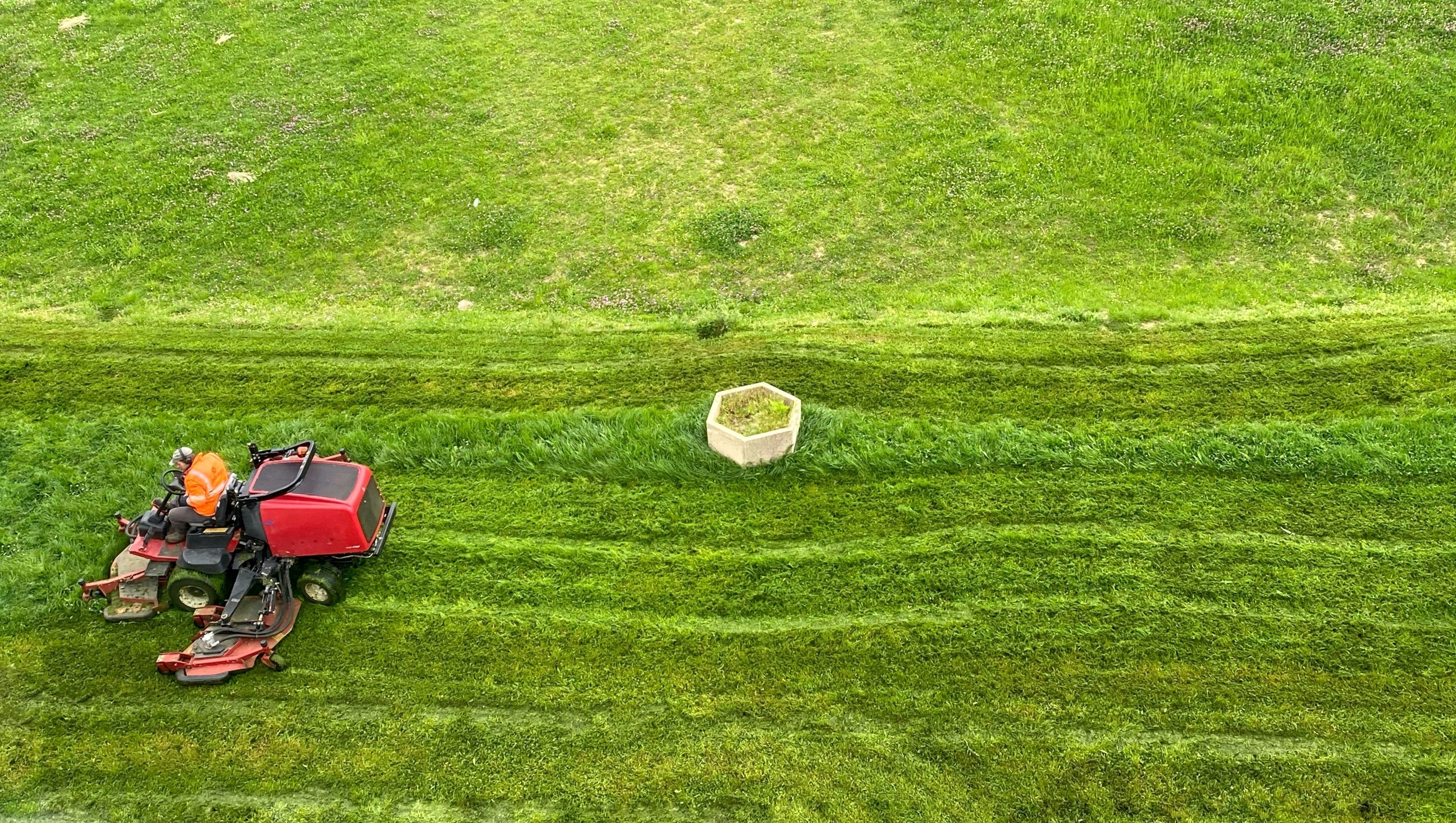
Downtime doesn't send a warning. One week the turf is dormant, the next your crews are running back-to-back accounts in thick, wet spring grass...and a machine that wasn't ready is now sitting on a trailer waiting for a part.
The maintenance steps that prevent that aren't complicated. They just get skipped when things get busy. And skipping them costs more than doing them ever would.
Here's what commercial landscapers stay on top of to keep equipment running and crews productive.
Sharp Blades = Less Fuel, Better Cuts, Happier Clients
This is the one that affects everything else. Dull blades tear the grass instead of cutting it - ragged lawns, unhappy clients, and more fuel burned per acre. A University of Nebraska study (Steinegger et al., 1983) found that sharp blades require 22% less fuel per acre than dull ones. On a commercial route running all day, that number matters.
For professional crews sharpening 100+ blades/day, a dedicated blade grinder is the right tool. The RBG 712 handles standard mower blades. The RBG 750 handles standard and mulching blades. Need faster throughput? The 934 and 950 run a larger wheel and motor for high-volume grinding.
Beyond sharpness, check balance. An unbalanced blade causes vibration that wears out spindles and bearings faster than almost anything else. Check it before reinstalling.
How often: Sharpen every 8-10 hours of cutting, or whenever you notice a visible change in cut quality.
Stop Grass Buildup Before It Stops You
Spring grass is the worst for deck buildup. Morning dew, rapid growth, and heavy clippings combine to clog your discharge chute and restrict airflow inside the deck. When that happens, cut quality drops and you're stopping to clean multiple times per day instead of mowing.
The fix that actually works here is proactive: clean your deck and apply Mo-Deck non-stick spray at the start of the season, before the first mow. Mo-Deck creates a protective barrier on the underside of the deck that prevents grass from sticking. Cleanup is faster, clogs are less frequent, and you maintain better airflow through the whole cut.
You can also use the Grassbuster deck cleaning tool to scrape buildup off quickly without getting under the machine every time.
Apply Mo-Deck again after each deep cleaning throughout the season. Reapplication is quick once the deck is dry.
How often: Inspect and clean the deck daily on heavy cutting days. Apply Mo-Deck at the start of the season and after cleanings.
Air Filters: Cheap to Replace, Expensive to Ignore
A clogged air filter starves your engine and leads to rough running, increased fuel consumption, and wear. In spring and summer conditions -- dusty lots, dry turf, heavy pollen -- your filter can go from clean to clogged faster than you'd expect.
Pull the filter and hold it up to light. If you can't see light through it, it's time to replace it, not just tap it out. Tapping only moves the debris around.
Stock a few lawn mower air filters per machine so you're swapping, not waiting.
How often: Check weekly in heavy cutting conditions. Replace when clogged or visibly damaged, never try to push a dirty filter through a job.
Oil and Filter Changes Keep Engines Running Longer
Engine oil breaks down under heat and load. Running dirty oil is one of the fastest ways to shorten engine life on equipment that costs several thousand dollars to replace.
For most commercial engines, change the oil every 50-100 hours depending on manufacturer specs. Always pair the oil change with a fresh oil filter - there's no point putting clean oil through a dirty filter.
Need the full filter schedule and fit check? Read our guide on how often to change a lawn mower oil filter before you stock filters for the season.
For Kawasaki-powered machines, Mowmore carries a direct replacement oil filter. For Kohler engines, there's a Kohler-compatible oil filter as well.
Use the right oil for your engine. Valvoline 10W-30 is a solid general-purpose choice for most commercial 4-cycle engines. For 2-cycle handheld equipment, always use the correct 2-cycle oil mix - wrong ratio means seized equipment.
How often: Every 50-100 hours, or at the start of each season.
Belts Fail at the Worst Time. Check Them Now.
Belts don't give much warning. Look for cracks, fraying, glazing, or unusual wear on the edges. A belt that looks borderline probably won't make it through a full week of commercial mowing.
Lawn mower belts wear differently depending on deck size and load. Glazed belts slip. Frayed belts snap. Either way, you're done for the day until you get a replacement. Keep a spare on the trailer during peak season.
How often: Inspect at the start of the season, again mid-season, and any time you notice slipping or strange noise from the deck.
Spark Plugs: Cheapest Fix, Most Ignored
Bad spark plugs make engines hard to start, run rough, and burn more fuel. They're also one of the cheapest parts you'll ever replace.
Pull them and look for heavy carbon deposits, worn electrodes, or cracked insulators. For most commercial engines, replace at the start of each season regardless. If you're seeing misfires or hard starts mid-season, don't waste time -- put in a new plug.
Champion RC12YC and NGK BPR6ES are two of the most common commercial engine plugs. Mowmore carries both.
How often: Inspect at the start of each season. Replace annually or when symptoms appear.
Bad Fuel Will Kill Your First Day Back Out
Spring is when fuel problems from winter storage show up. Degraded fuel left in the tank can gum up carburetors and fuel filters, causing hard starts, rough idling, or no-starts on the first day back out.
If you didn't use STA-BIL fuel stabilizer before storing your equipment last fall, that's the first thing to address going into storage this season. STA-BIL prevents fuel breakdown during storage and keeps the carb clean.
Check your fuel filters while you're at it. A clogged fuel filter causes the same symptoms as a carb problem and is a much cheaper fix.
How often: Use fuel stabilizer when storing equipment. Replace fuel filters at the start of each season.
Flat Tires Waste Jobs. Stop Dealing With Them.
Flat tires on zero turns are a recurring tax on your crew's time. If your machines are getting punctures regularly, DFlex flat-free tires are worth the upgrade. No flats means no mid-job delays. That time stays on the job, not on the trailer waiting for a fix.
For standard tires, check pressure before every use. Low pressure affects traction, causes uneven cutting on slopes, and accelerates wear. Inspect sidewalls at the start of spring, especially if equipment sat through a cold winter.
How often: Check pressure daily. Inspect condition weekly.
Get Parts Before You Need Them
The landscapers who stay on schedule aren't just better at maintenance -- they're better stocked. Filters, belts, blades, plugs. The parts that fail mid-season are cheap when you buy them ahead of time and expensive when you're down waiting for a shipment.
Mowmore.com stocks 3,000+ commercial mower parts with same-day shipping. Wholesale and bulk pricing for crews who buy in volume. And every order earns points through the Cutter Club rewards program.
Spend less. Make more$.
FAQs: Commercial Lawn Mower Maintenance
How often should I sharpen commercial mower blades? Every 8-10 hours of cutting time, or sooner if cut quality drops. Crews running all-day routes should expect to sharpen daily or every other day.
How do I stop grass from sticking to my mower deck? Clean the deck thoroughly, then apply a non-stick deck spray like Mo-Deck before the first mow. Reapply after each cleaning. Spring conditions -- wet grass, fast growth -- are when buildup is worst, so starting clean matters.
What causes a mower deck to clog? Heavy, wet clippings from spring growth and reduced airflow from grass buildup are the main causes. Dull blades also contribute since they don't discharge cleanly. Keep blades sharp, apply a non-stick coating to the deck underside, and inspect the discharge chute for obstructions.
How do I know when to replace mower belts? Look for cracks, fraying, hard glazing, or unusual wear on the belt edges. Slipping or noise from the deck is also a warning sign. If a belt looks borderline, replace it -- waiting costs more than a new belt.
Where can I get commercial mower parts fast? Mowmore.com carries 3,000+ commercial mower parts with same-day shipping on in-stock items. Wholesale and bulk pricing available.